Know what to say.
Keep it your call.

Your desktop sales copilot. Prepare with your context, rehearse the hard questions, and get useful guidance during the conversation.

Live guidance: a customer says the pilot needs finance approval. The copilot suggests asking who will approve the evaluation. The rep can steer it to keep the guidance concise.
Illustrative examples throughout, following one fictional prospect.
Guidance in context.
Suggestions informed by the conversation, your materials, and the selected Playbook.
Ask, stop, or steer.
Request help, stop a response, or adjust how the copilot supports the rest of your session.
Your call. Your judgement.
Choose what to say. Stay in your meeting app, with guidance alongside you on desktop.

The call starts
before the call.

One Prospect holds your context. Bring it into your preparation, your practice, and the real conversation.

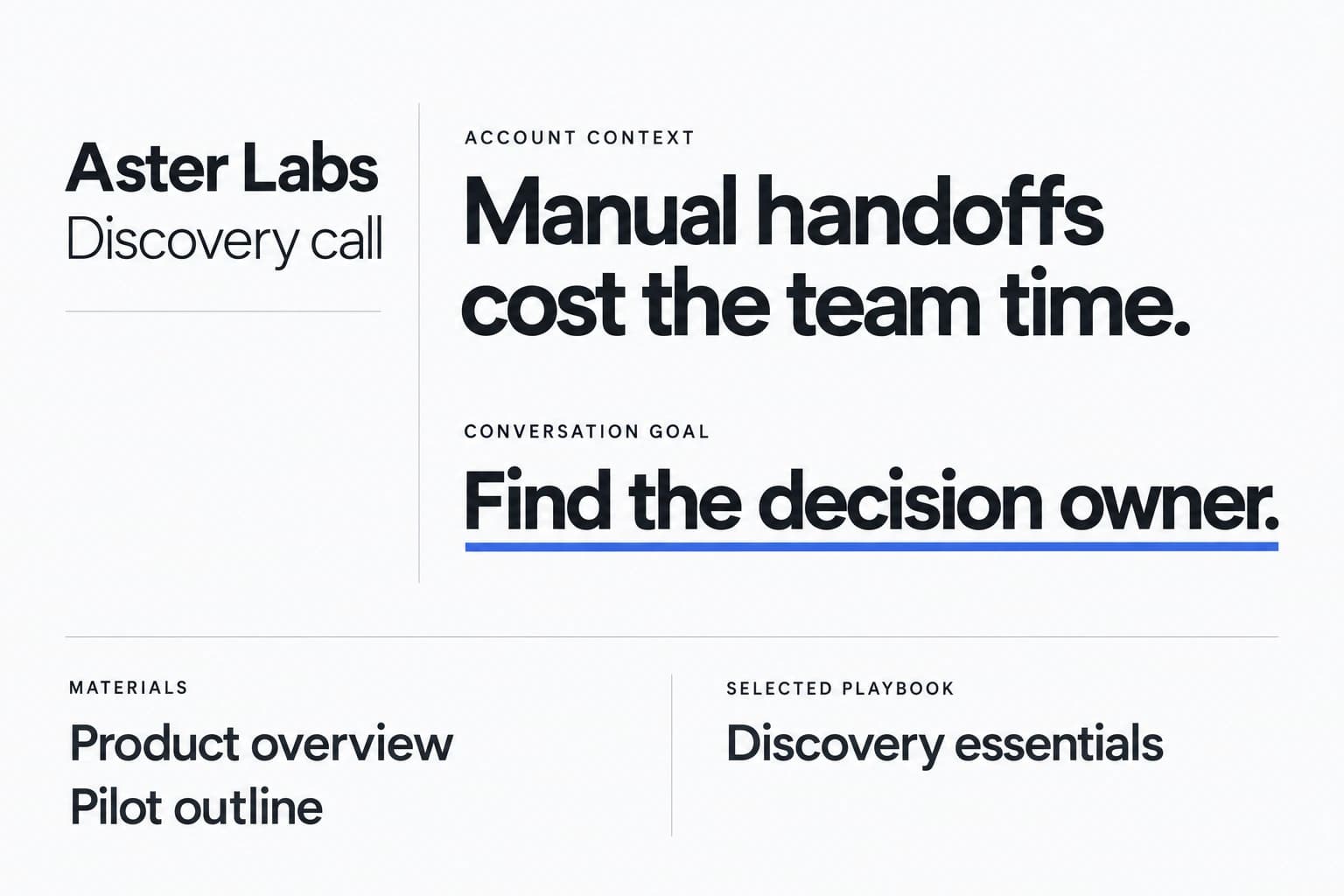
Preparation for Aster Labs: manual handoffs cost the team time; the call goal is to find the decision owner. Product overview and Pilot outline materials sit alongside the Discovery essentials Playbook.

Your context, ready to use.

Give your Prospect a brief. Attach useful materials from your Library and choose a Playbook for the conversation ahead.

What goes into your preparation
Prospect brief
Keep account context and the purpose of the conversation together, across sessions.
Materials from your Library
Attach relevant documents and check that they are ready to use. Personal and explicitly shared Team materials keep their own boundaries.
A selected Playbook
Set the approach that guides the copilot, then carry it into practice and live conversations.
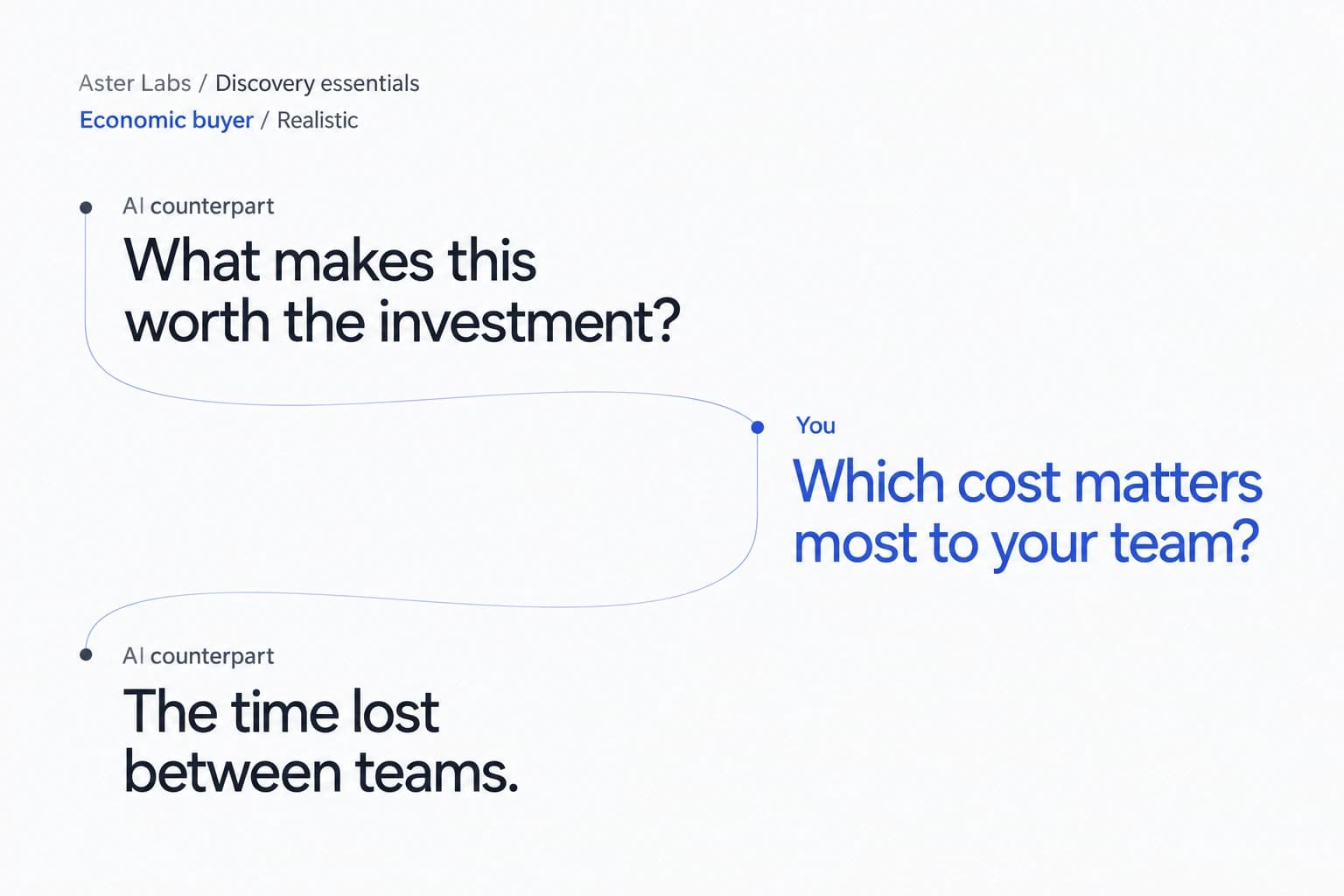
Rehearsal for Aster Labs with the Economic buyer persona at Realistic difficulty. The AI counterpart asks what makes the investment worthwhile; the rep explores costs, revealing time lost between teams.

Practise the harder questions.

Choose the customer persona and difficulty. Practise with an AI counterpart using the same Prospect context, materials, and Playbook.

Inside a rehearsal
A customer to practise with
Explore different perspectives, including Economic buyer and Procurement.
The right level of challenge
Choose Cooperative, Realistic, or Challenging difficulty for the conversation.
You speak. The counterpart replies in text.
Work through questions and objections with your microphone, then review the conversation and its debrief.
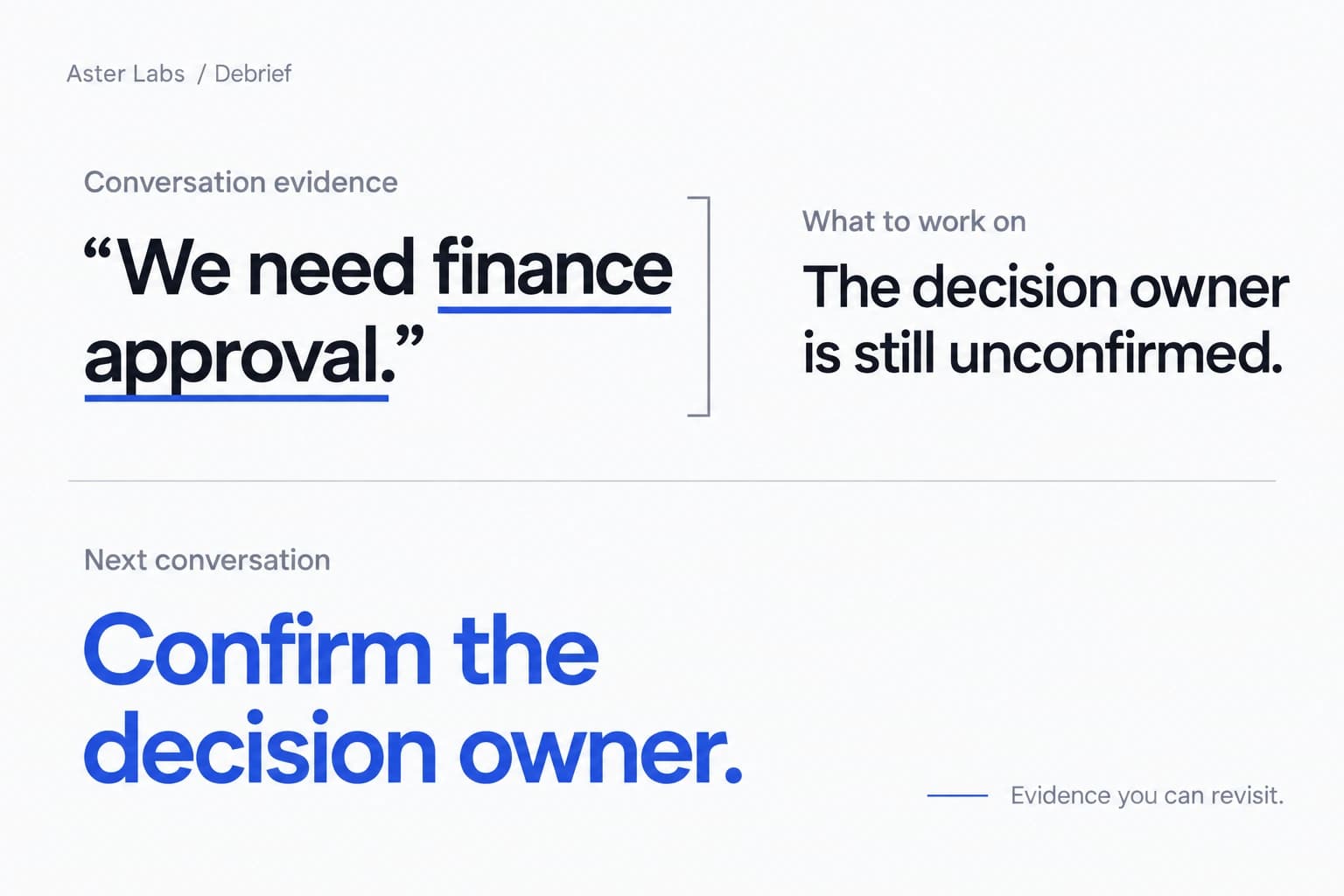
Debrief for Aster Labs: the transcript mentions finance approval, but the decision owner remains unconfirmed. The next conversation should confirm that owner.
After the conversation

See the evidence.
Find your next move.

Revisit the transcript behind your feedback. Review the Account Action Plan and inspect the coaching memory you carry into the next call.

Feedback with a source.
Review strengths and practice opportunities alongside the transcript evidence.
A next step you can act on.
Keep the Account Action Plan and next actions connected to the same Prospect.
Learning you can revisit.
Inspect coaching memory and carry a useful focus into your next rehearsal.

Your work.
Your workspace.

Do your call work on desktop. Manage workspaces, members, roles, and subscriptions on the web.

Open workspaces

Personal

One independent workspace, private to you. Joining a Team does not move your personal data.

Team

Bring explicitly shared materials and Playbooks into a separate workspace. A valid Team subscription covers admitted members.

Built for your attention.
Clear about your data.

A tool for consequential conversations should be clear about how it works.

Desktop audio. No meeting bot.
The app captures microphone and system audio. Live audio is sent to the backend and speech-recognition provider.
No stored raw recordings.
The product does not store raw audio, recordings, screenshots, or screen video. It does not read your screen.
Structured conversation history.
Transcripts, debriefs, and derived memory have no automatic expiry by default. Current deletion controls do not yet cover the entire structured-data lifecycle.

Before your first conversation.

How do I get started?

Visit Download app to check desktop release availability. When a download is available for your computer, install it, sign in, and create a Prospect. Downloads appear when their desktop release is ready.

Can I practise before the call?

Yes. Rehearse with a text AI counterpart using your Prospect context, materials, and Playbook. Work through questions and objections before the real conversation.

Does a bot join the meeting?

No. Sales Copilot runs as a desktop app and captures microphone and system audio. You stay in your meeting app while the copilot provides guidance on your desktop.

What happens to the conversation data?

Live audio is sent to the backend and speech-recognition provider. The product does not store raw audio, recordings, screenshots, or screen video. Structured data, including transcripts and debriefs, has no automatic expiry by default. Current deletion controls do not yet cover the entire structured-data lifecycle.

Who handles notice and consent?

The user and their organization are responsible for satisfying the notice and consent obligations that apply to each call. The product does not collect participant consent.

Where can I find pricing?

The Pricing link opens published plans when they are available. If it brings you here, public pricing is currently unavailable. Existing workspace subscriptions can be managed in Workspaces.

More prepared.
More present.

Bring your context to the next conversation.

Download app